Specialized cast-iron sewer pipe replacement from Top Shelf
- Leaking and cracked cast-iron building drains
- Deteriorated hubs, fittings, and horizontal runs
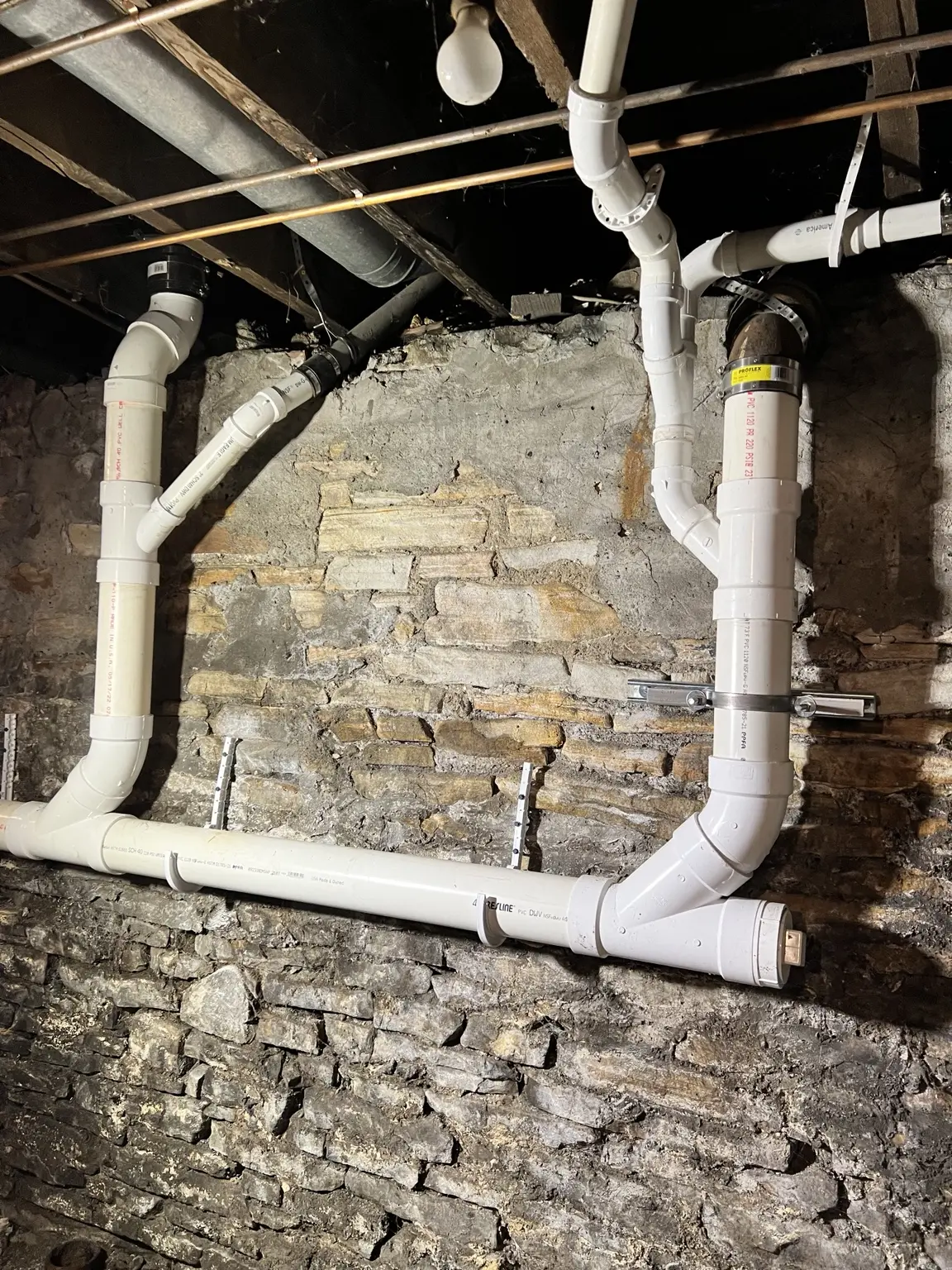
- Exposed cast-iron removal and PVC replacement
- Shielded transition couplings
- Cleanout and maintenance-access improvements
- Proper pitch, alignment, and pipe support
- Connection to sound existing piping
- Final drainage and leak testing
Replace the failed piping—not automatically everything
Visible cracking, active leakage, severe scaling, failed joints, and poor support help determine the practical replacement limits. When a sound section can remain, the new piping is transitioned using an approved shielded coupling and supported independently.
Pitch and support protect the new work
Horizontal drainage piping needs consistent slope without sags. Hangers and supports keep the pipe aligned and prevent movement from loading the remaining cast iron or the new transition. Accessible cleanouts can make future inspection and maintenance easier.
Clear scope for older-home conditions
Finished surfaces, concealed piping, concrete removal, excavation, hazardous materials, and restoration can materially change a sewer-piping project. The estimate identifies the accessible work and any exclusions so the scope is understandable before work begins.