
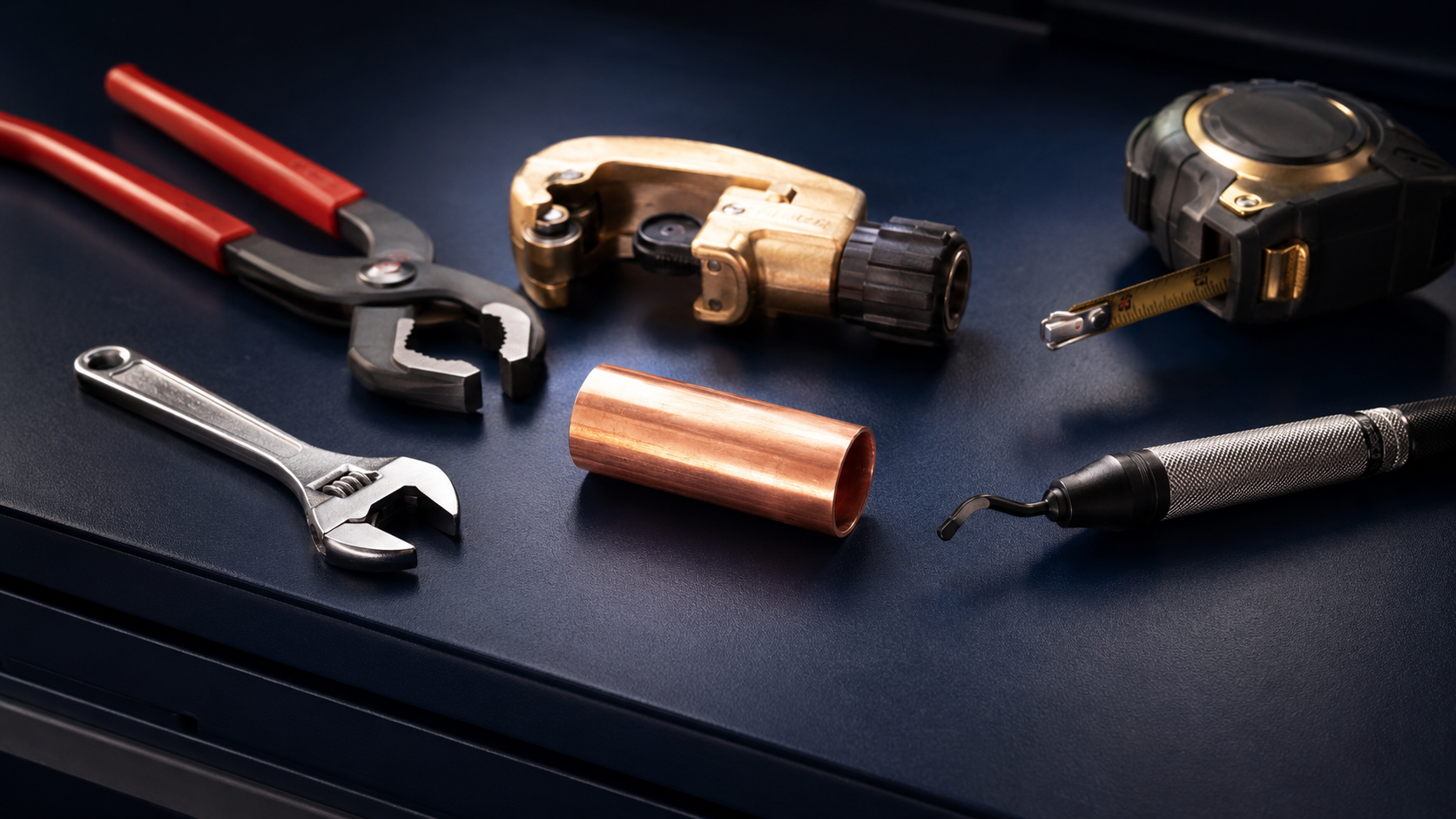
Older Scranton homes often combine original piping with decades of additions and repairs. The right plan begins by identifying which parts are still sound, which failures are isolated, and which symptoms point to a larger water, gas, or drainage-system problem.
This guide is based on Greg’s field experience diagnosing and repairing plumbing, steam, and hydronic systems in Scranton-area homes. Site conditions and equipment instructions control the final recommendation.
Aging water piping and valves
Galvanized restrictions, copper pinholes, inaccessible or seized shutoffs, mixed materials, and freeze-damaged branches can cause low flow, leaks, and difficult service. Incoming pressure and the pressure-reducing valve should be checked before blaming pipe size alone.
Cast-iron drainage condition
Leaking hubs, rust staining, cracks, heavy scale, failed supports, and bottom-wall deterioration can justify targeted cast-iron replacement. New drainage needs correct pitch, support, venting, cleanout access, and shielded transitions to sound existing pipe.
Plan repairs around the whole house
Water heaters, thermal expansion, fixtures, gas appliances, filtration, and future remodeling can all affect the best piping plan. A phased repair can be sensible when the priorities and connection points are clearly defined.
Licensed Plumber in Scranton, PA
Licensed plumber in Scranton, PA for fixtures, water and gas piping, repiping, pressure problems, filtration, water heaters, and kitchen or bathroom plumbing.
Frequently asked questions
Does old plumbing always need complete replacement?
No. Condition, access, pressure, material, and failure history determine whether a localized repair or larger repipe makes sense.
Can low pressure come from the city supply?
Yes, but restrictions, a failing pressure-reducing valve, partially closed valves, or undersized interior piping can produce similar symptoms.