
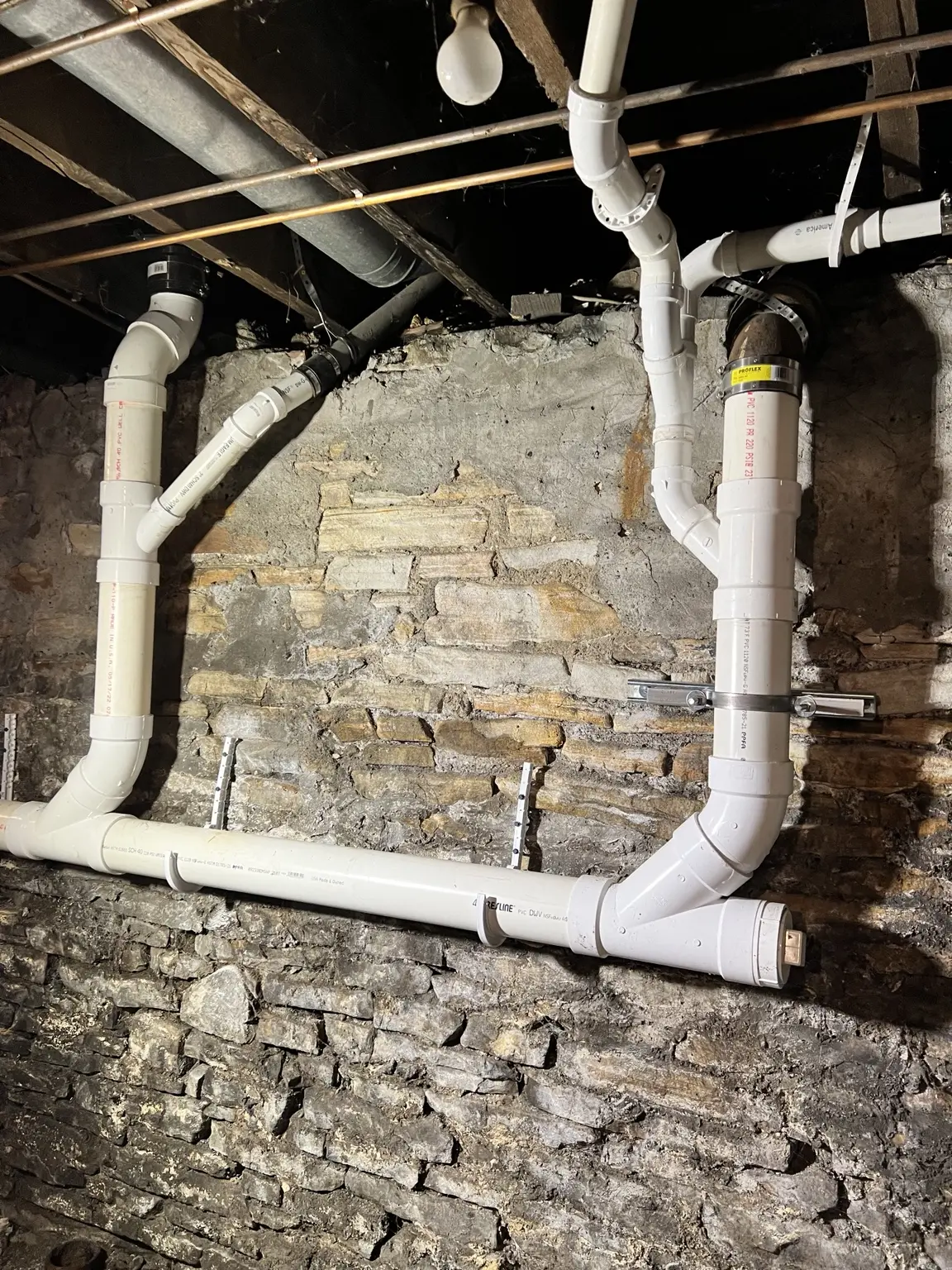
This completed NEPA drainage-piping project involved removing a deteriorated cast-iron house trap and a seized backwater valve, then rebuilding the accessible section in 4-inch PVC. The customer’s identity and exact address are intentionally omitted; the scope and installation details are preserved so homeowners can understand what this type of repair involves.
This project summary uses verified completed-work details while omitting the customer’s identity and exact address.
The existing problem and repair limits
The existing backwater valve was seized and the connected cast-iron house trap was removed as part of the defined repair area. The work was limited to the accessible failed assembly and its sound connection points rather than turning the job into an unnecessary whole-building repipe.
A serviceable 4-inch PVC layout
Top Shelf installed a new 4-inch PVC backwater valve with an accessible cleanout at the valve and another 4-inch cleanout upstream. Keeping these components reachable matters because a backwater valve is a mechanical drainage component that may need inspection or service later.
Transitions, access, and final testing
The new PVC was connected to the remaining sound piping with correctly sized shielded no-hub couplings. The existing wood access opening remained intact, and the project did not require concrete cutting or concrete repair. The completed piping was tested and left leak-free.
What a backwater valve project does—and does not do
A backwater valve is intended to limit reverse flow through the protected building drain when installed in an appropriate location. It does not replace proper drainage-pipe pitch, sound piping, accessible cleanouts, or routine valve inspection, and it is not a substitute for drain-cleaning or sewer-backup clearing service.
Cast-Iron Sewer Replacement Scranton, PA
Cast-iron sewer replacement in Scranton, PA for leaking hubs, cracked pipe, severe scaling, failed supports, and deteriorated exposed building drains.
Frequently asked questions
Why does a backwater valve need accessible service clearance?
The valve contains moving components and should remain reachable for inspection and service; burying the access point defeats that purpose.
Was concrete cutting part of this project?
No. The existing wood access remained intact, and no concrete cutting or concrete repair was required for this completed scope.
Does Top Shelf clear active sewer backups?
No. Top Shelf repairs and replaces damaged drainage piping and backwater-valve assemblies but does not provide drain-cleaning, rooter, hydro-jetting, or sewer-backup clearing service.